Peter Attia says Longevity is about maximising the length of life as well as the (physical, cognitive and emotional) quality of it.
Using Attia’s definition literally, a company only needs to improve the emotional, cognitive or physical quality of life to be considered a “longevity company”.
AirBNB? Enhances emotional and cognitive well-being through novelty, joy, connection, and reduced loneliness
Nespresso? Potential cognitive benefits of caffeine and emotional pleasure
This shows clearly: the broader the definition, the less useful it becomes for distinguishing true longevity companies from lifestyle brands.
What is a longevity company?
Our definition of longevity: Longevity is the practice of extending the duration and quality of life by preventing, delaying, or reversing biological aging and maintaining physical, cognitive, emotional, and social well-being over time.
Therefore, a longevity company develops or delivers interventions that directly or systematically extend lifespan and/or healthspan by targeting biological, behavioural, or environmental drivers of aging.
✅ AirBNB would no longer fit, because it doesn’t intervene in drivers of aging, it merely influences subjective experience.
But what if a company does not directly target a driver of aging, but a downstream result of aging, which still extends the lifespan of the target population - is it a longevity company?
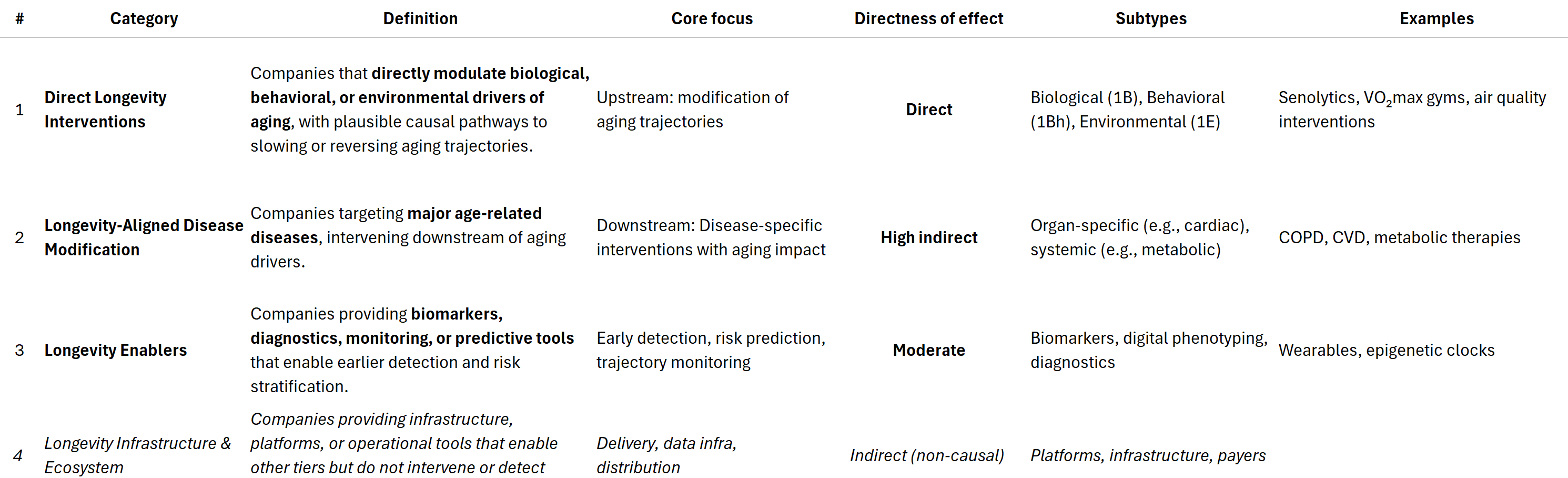
A simple yes/no categorisation is not enough, which is why we developed our four tiers to categorise longevity companies.
How we categorise longevity companies
We categorise longevity companies in the following way:
Direct longevity interventions: These interventions are mechanistically upstream of most age-related diseases. If effective, they can extend healthspan independent of a single disease label. This includes clinically validated lifestyle interventions, environmental health, and structured prevention.
Longevity-aligned disease modification: Downstream of aging, disease-specific interventions that extend life- and healthspan
Longevity enablers: Early detection, risk prediction, trajectory monitoring
Infrastructure & Ecosystem: Delivery, data infrastructure, distribution - while these companies support categories 1-3, we do not focus on this category in our analyses. Nevertheless, it is included for completeness.
See the detailed overview here:
Of course, the longevity business sector is almost as complex as longevity science itself; therefore, this model is just scratching the surface. Nevertheless, for our weekly analyses, this level of categorisation is sufficient.
How we analyse longevity companies in depth
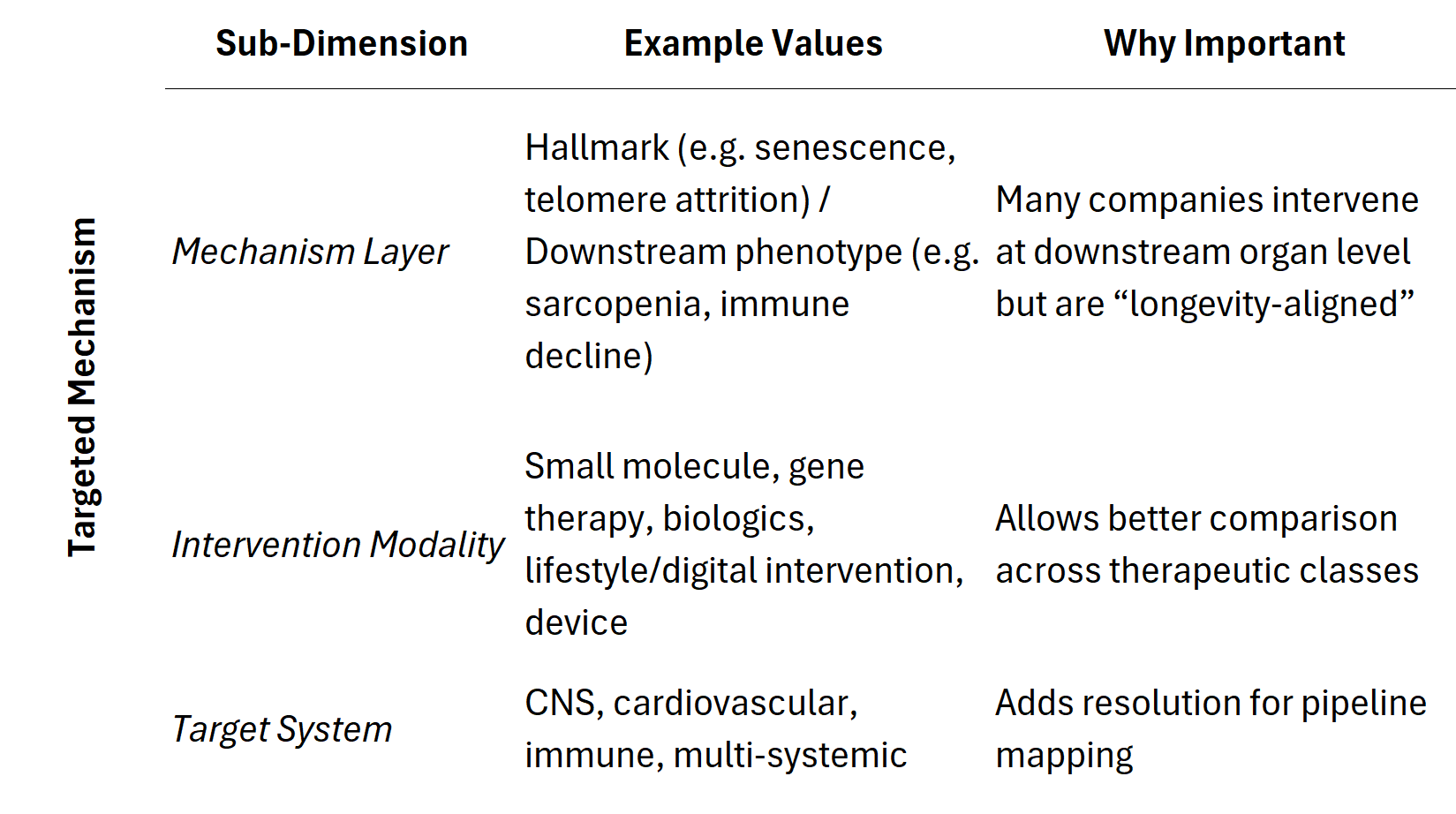
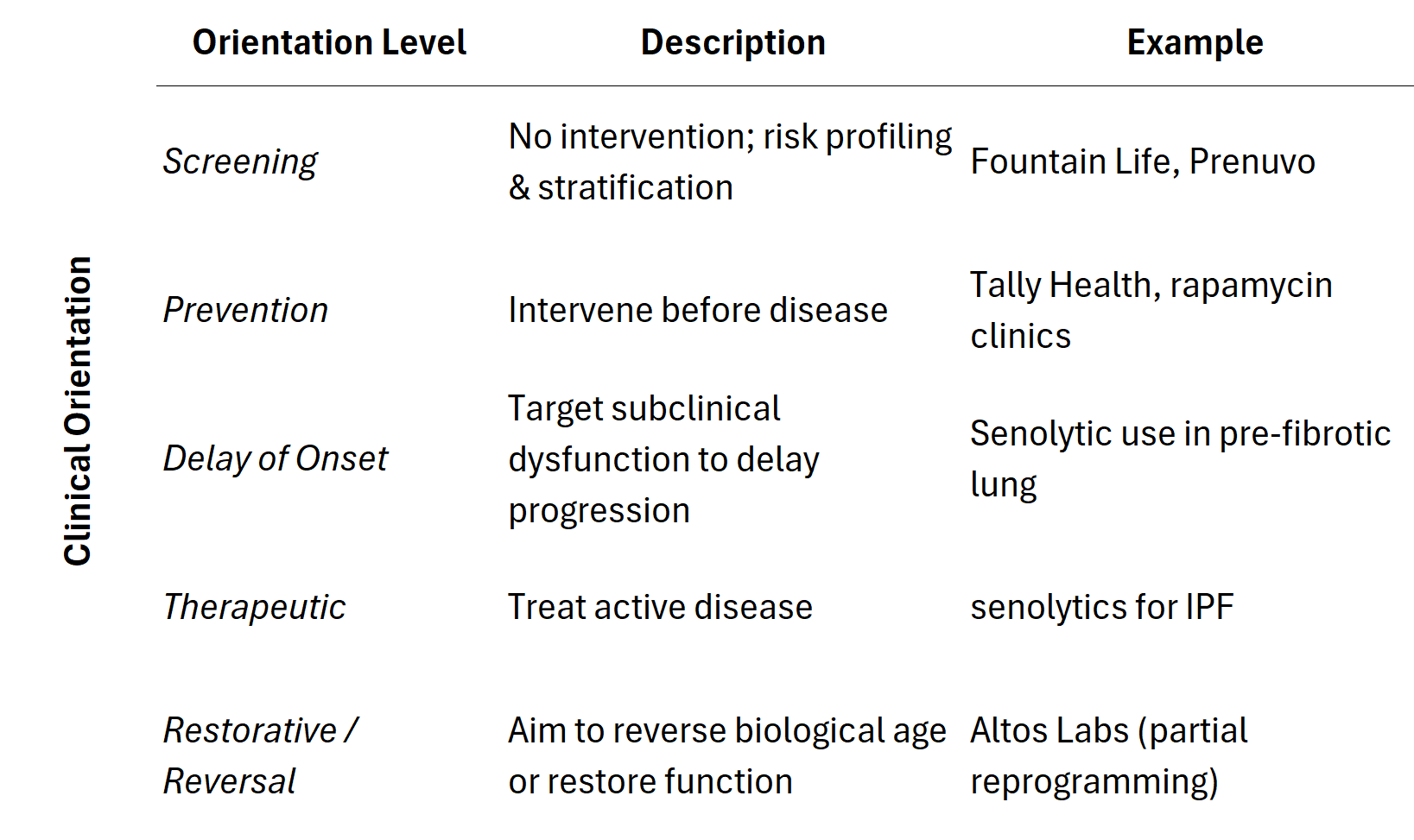
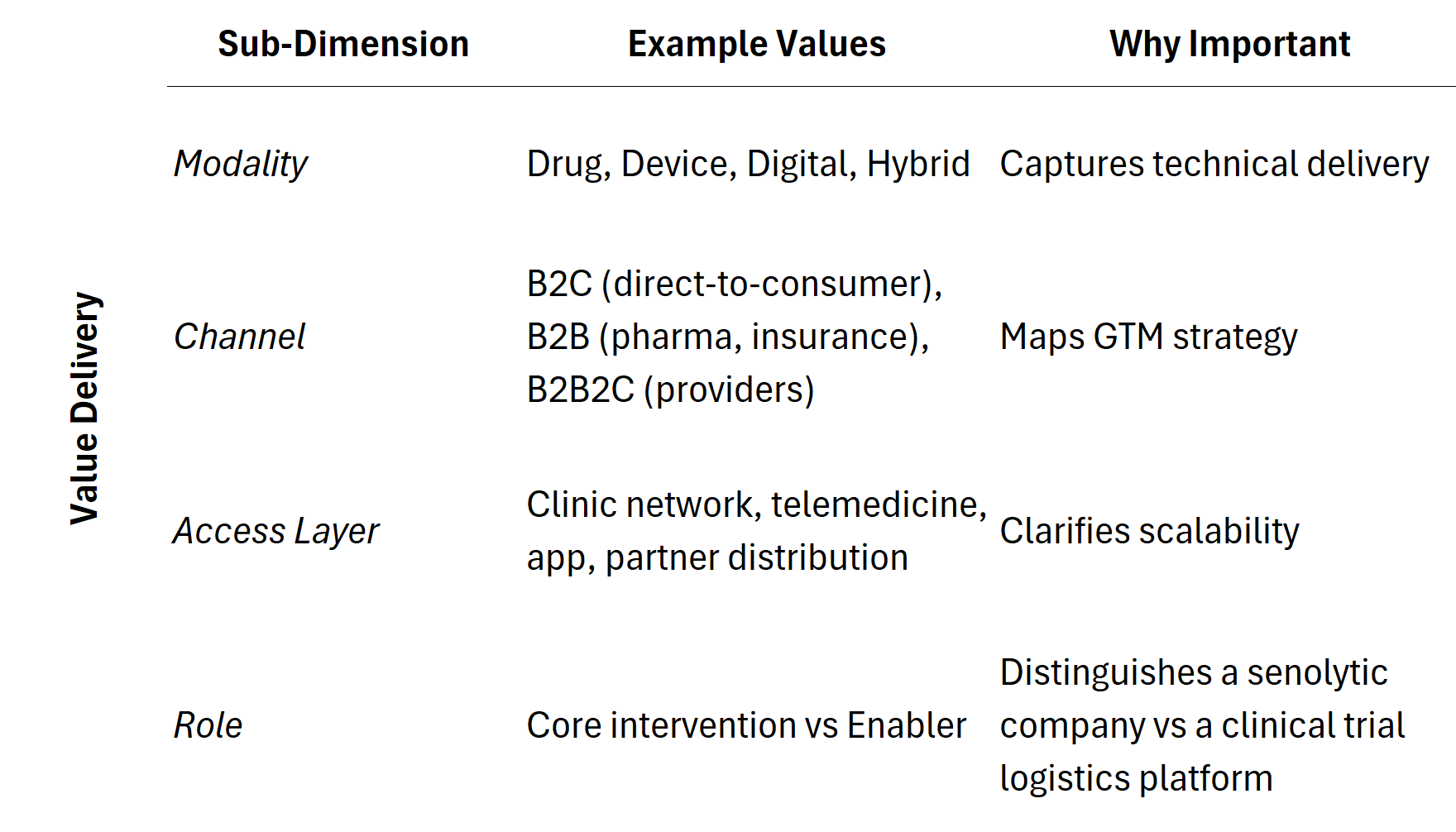
When analysing longevity companies in more detail, we use multi-dimensional mapping to further categorise companies based on three dimensions:
Targeted Mechanism
Clinical Orientation
Value Delivery
The Target Mechanism dimension can be sub-categorised into mechanism layer, intervention modality, and target system:
The clinical orientation can be sub-categorised into screening, prevention, delay of onset, therapeutic, and reversal:
While the two dimensions above basically define the value proposition of a company, the value delivery can be further broken down into modality, channel, access layer, and role:
How do the 12 hallmarks of aging fit in?
Aging in humans is driven by an interplay between:
Biological drivers (intrinsic)
Behavioural drivers (lifestyle)
Environmental drivers
The hallmarks describe what happens inside the body, but not necessarily what drives them to appear or accelerate.
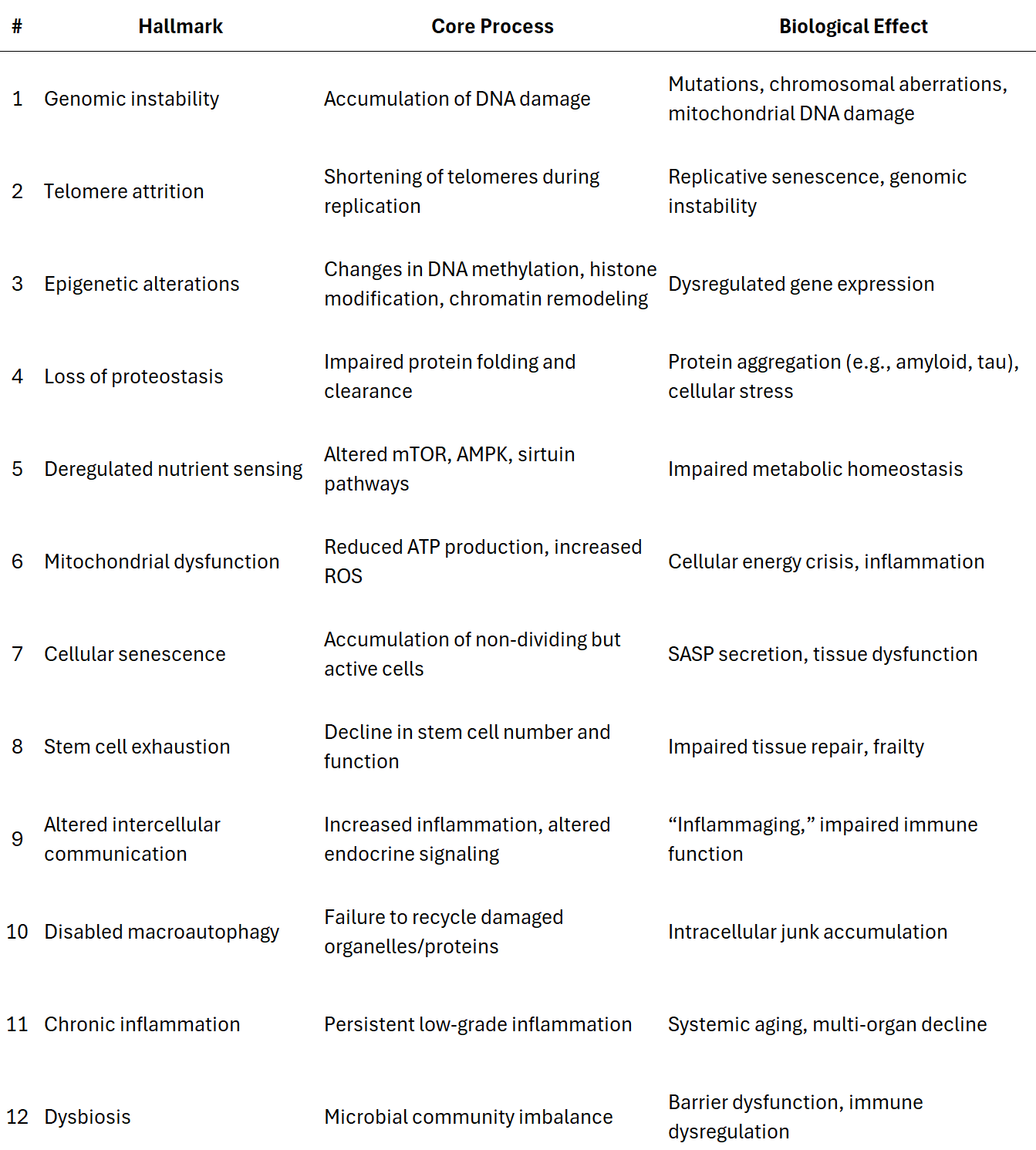
Behavioural and environmental factors are often “upstream accelerants” or “modulators” of the hallmarks. For example, let’s take a look at the biological–behavioural interface
Hallmarks:
Mitochondrial dysfunction
Deregulated nutrient sensing
Disabled macroautophagy
Nature:
These are highly sensitive to lifestyle variables:Sedentarism → mitochondrial decline
Constant nutrient abundance → mTOR overactivation
Circadian rhythm disruption → impaired autophagy
Behavioural drivers:
Physical activity (or lack thereof)
Nutrition (caloric load, protein composition, timing)
Sleep–wake cycles
Therefore, we need to look beyond the 12 hallmarks of aging when categorising companies and judging their impact on longevity.